Bank of England Base Rate Update: May 2025
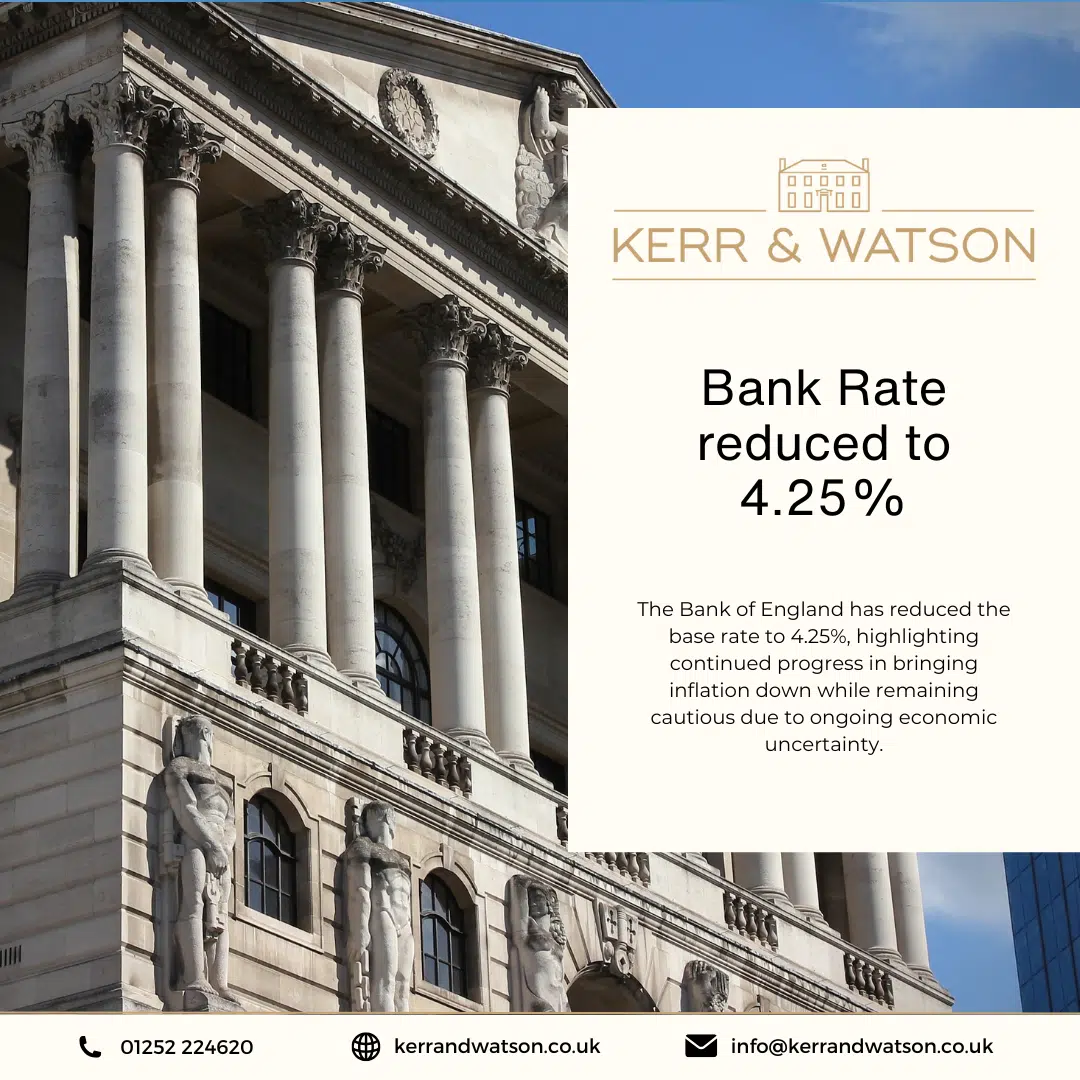
The Bank of England has just announced a change to the base rate. As of May 2025, the rate has been reduced by 0.25 percentage points to 4.25%. This decision affects everything from the cost of borrowing to the interest you earn on savings. If you have a mortgage, loan, or are thinking about buying a home, this update could impact you.
What is the base rate and why does it matter?
The base rate, also known as Bank Rate, is the interest rate set by the Bank of England’s Monetary Policy Committee (MPC). It’s a tool used to help control inflation and keep the economy stable.
Lenders often use the base rate as a starting point when setting mortgage and loan interest rates. So when the base rate changes, the cost of borrowing can rise or fall. That means your monthly payments could go up or down, depending on your type of mortgage.
What happened in May 2025?
At the meeting held on 7 May 2025, the MPC voted by a narrow margin (5–4) to lower the base rate from 4.5% to 4.25%. This decision follows a period of steady rates and signals a cautious move towards easing some of the pressure on borrowers.
Here’s how the vote broke down:
- 5 members voted to reduce the rate to 4.25%
- 2 members wanted a bigger cut to 4%
- 2 members wanted to keep the rate at 4.5%
This split vote shows that even experts have different views on how best to support the economy right now.
Why was the rate reduced?
There are a few key reasons behind the decision:
- Falling inflation: Inflation has dropped to 2.6% in March 2025, down from 2.8% the month before. That’s getting closer to the Bank’s target of 2%.
- Slower economic growth: The economy has cooled off since mid-2024, and the job market has loosened slightly.
- Global uncertainty: Trade tensions, especially between the US and other countries, have made global markets more unpredictable. This could slow down economic activity.
By lowering the base rate slightly, the Bank hopes to support growth without letting inflation climb again.
What does this mean for your mortgage?
If you have a mortgage or are planning to get one, here’s how this change could affect you:
Tracker Mortgages
If you’re on a tracker mortgage, your rate moves in line with the base rate. So this reduction should mean your monthly payments drop slightly.
Standard Variable Rate (SVR) Mortgages
If your mortgage is on a lender’s SVR, it might fall – but not always straight away. Lenders don’t have to follow the base rate, but many will make some adjustment. It’s worth checking with your lender or getting advice.
Fixed Rate Mortgages
If you’re on a fixed rate deal, nothing changes for now. Your rate is locked in until your fixed term ends. But if you’re coming to the end of your deal, it’s a good time to look at your options – especially if more rate cuts are expected.
What’s happening with inflation?
Inflation has fallen quite a lot since the peak in 2022. That’s good news because it means prices aren’t rising as quickly. But the Bank still expects inflation to rise a bit again later this year, possibly reaching 3.5% by autumn.
That’s mainly due to previous rises in energy bills and some regulated prices. However, the Bank thinks this will be temporary, and inflation should fall back again afterwards.
What about jobs and the economy?
The economy grew slightly at the start of 2025, but underlying growth has been slow. Some of the increase was due to one-off factors, especially in manufacturing. The job market is not as strong as it was last year, but there’s no major cause for alarm just yet.
What could happen next?
The next rate decision is due on 19 June 2025. The Bank has made it clear that there’s no set path for what happens next. Future decisions will depend on what the data shows over the coming weeks and months.
The Bank is trying to balance two things:
- Not cutting rates too quickly, which could cause inflation to rise again.
- Not keeping rates too high for too long, which could slow down the economy more than necessary.
This means that more small cuts could follow – but only if the economic picture continues to improve.
Key takeaways
- The base rate has been cut to 4.25%
- Inflation is falling, but may rise again temporarily
- Mortgage rates could drop slightly depending on your lender and mortgage type
- The economy is still growing, but at a slower pace
- Global uncertainty is adding extra caution to decision-making
What should you do now?
Whether you’re a homeowner or looking to buy, it’s a good time to review your mortgage.
Rate changes can create opportunities, but also bring uncertainty. If you’re not sure what this update means for you, we’re here to help.
At Kerr & Watson, we offer friendly, expert mortgage and protection advice that’s tailored to your personal situation. We take the time to understand your goals, and we explain your options in plain English.
If you’re thinking about remortgaging, buying your first home, or just want to check you’re still on the right deal, get in touch. We’ll help you navigate your options with clear advice.
Conclusion
The Bank of England’s decision to cut the base rate to 4.25% shows that progress is being made in controlling inflation, even as the economy faces some challenges. This is a cautious step towards easing financial pressures without losing sight of long-term goals.
If you’re unsure how this might affect you, don’t leave it to guesswork. Reach out to us at Kerr & Watson – we’re happy to talk through your mortgage options and make sure you’re in the best possible position.
Need advice? Get in touch, we’re only a call or message away.
Read more: Bank Rate reduced to 4.25% – May 2025