Bank of England Base Rate Update: June 2025
The Bank of England has announced its latest decision on interest rates following the June 2025 Monetary Policy Committee (MPC) meeting. If you’re wondering what this means for your mortgage or thinking about buying a home or refinancing, this update will give you the key facts in a clear and straightforward way.
What’s Been Decided?
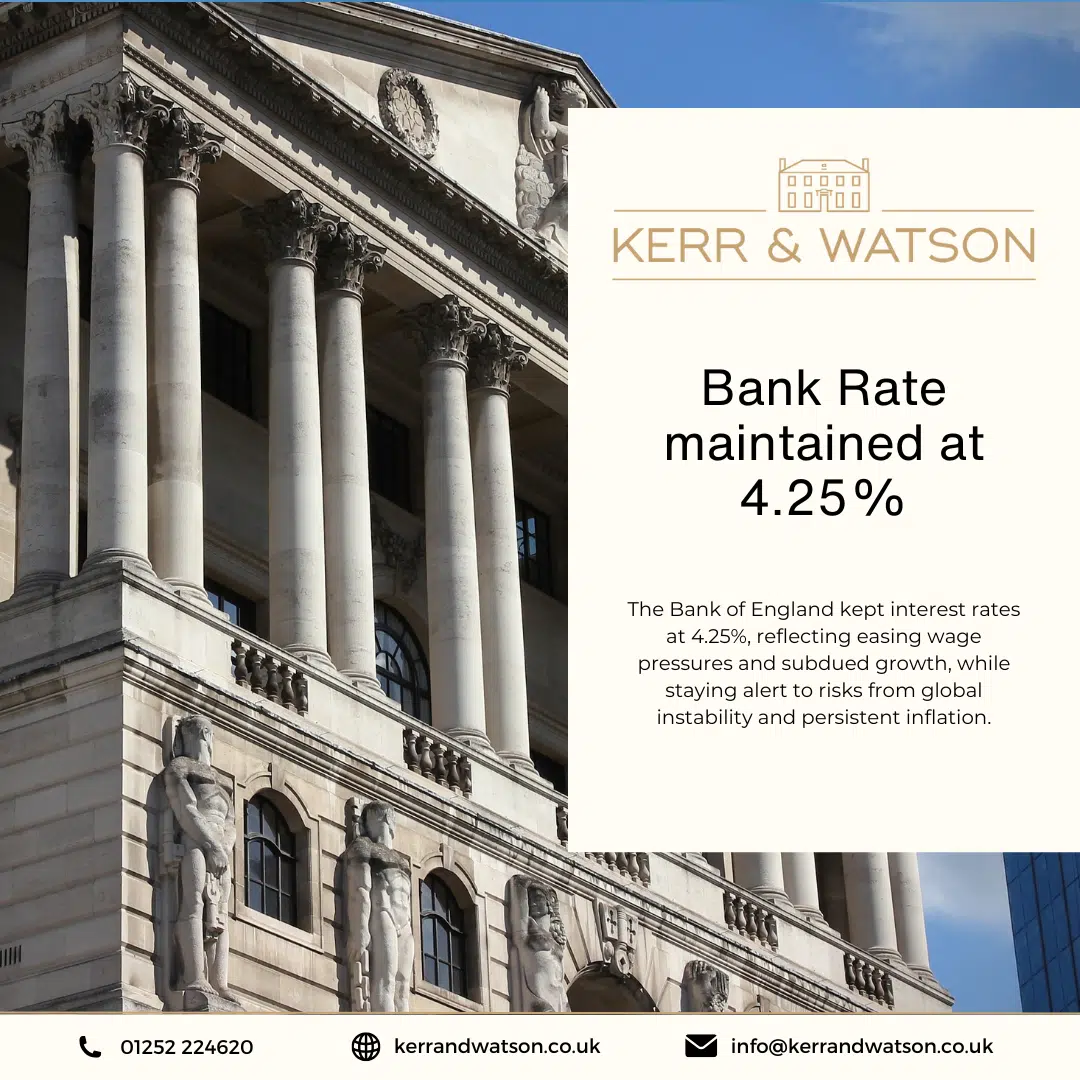
The Bank of England has kept the base rate at 4.25%. This decision was made by a vote, with six members of the MPC voting to hold the rate and three voting to reduce it slightly to 4%. That tells us there’s some division on whether borrowing costs should start to come down.
The base rate is important because it affects the cost of borrowing and the interest you earn on savings. It also plays a big part in how much you pay on mortgages and other loans.
Why Was the Base Rate Held?
Here’s what influenced the decision:
- Inflation is still above the target: Consumer Price Index (CPI) inflation rose to 3.4% in May, up from 2.6% in March. While this was expected, it’s still well above the Bank’s target of 2%.
- Pay growth is slowing: Wages are rising more slowly than they were, which could help ease inflation over time.
- The economy is not growing much: Economic growth remains sluggish and the job market is showing signs of weakening.
- Global uncertainty: Issues such as rising energy prices and ongoing conflicts abroad have created unpredictable conditions, making the Bank cautious about cutting rates too soon.
Put simply, while things are moving in the right direction, with inflation falling over time and wage pressures easing, the Bank still sees reasons to tread carefully.
What This Means for You
If you’re a homeowner, first-time buyer or thinking about refinancing, here’s what this means in real terms:
- Mortgage rates are unlikely to drop yet: Because the base rate hasn’t changed, most lenders won’t make major moves on interest rates for now.
- Some fixed rates may shift slightly: Lenders still price their fixed deals based on market expectations, so if markets believe cuts are coming later in the year, we might still see small adjustments.
- Tracker and variable rate mortgages stay put: If you’re on one of these products, your payments should remain the same for now.
If you’re feeling unsure about what type of mortgage suits your situation in this environment, we’re here to help with tailored advice.
What’s Happening in the Economy?
To understand why the Bank made this choice, it helps to know what’s going on in the wider economy.
Here’s a quick summary:
Inflation
- Inflation is still above the 2% target but is expected to fall gradually in the months ahead.
- Rising energy and regulated prices (like utility bills and taxes) have pushed prices up again recently.
- Food prices also remain high, especially for everyday items like meat, chocolate, and drinks.
Wages and Jobs
- Pay rises are slowing down, especially in private sector jobs.
- Fewer job vacancies and more people looking for work suggest the job market is softening.
- These trends reduce inflation pressure over time, but progress has been steady rather than fast.
Growth
- The economy grew by 0.7% at the start of the year, a bit more than expected.
- But that growth has dipped again, and recent surveys show businesses are cautious about the future.
- Household spending and business investment have been affected by tax changes and uncertainty.
Global Factors
- Conflict in the Middle East has pushed up oil and gas prices.
- Trade tensions, especially around tariffs, are making global markets more unstable.
- These global pressures feed into the cost of living and the Bank’s view of what might happen next.
What Might Happen Next?
There is no fixed timeline for when rates might start to fall. The Bank has made it clear that:
- Future rate changes will depend on what the data shows.
- Inflation needs to keep falling and stay low.
- The economy needs to be stable enough for lower borrowing costs to make sense.
Some committee members believe we are close to a point where rates could start to fall gradually. Others are more cautious and want to see stronger signs that inflation won’t rise again.
Conclusion
The Bank of England has chosen to leave the base rate unchanged at 4.25% in June 2025. While inflation has come down a lot from its peak, it’s still above target, and the economy remains under pressure. This cautious decision reflects a careful balance between fighting inflation and supporting growth.
For you, it means mortgage rates are unlikely to change much in the short term, but that doesn’t mean you should wait around. Whether you’re a first-time buyer, remortgaging, or simply planning ahead, now is a great time to get professional advice.
At Kerr & Watson, we help you make sense of the market and find the right mortgage or protection policy for your needs. Get in touch with us today for friendly, clear, and expert guidance.
Read more: Bank Rate Maintained at 4.25% – June 2025