Key Points at a Glance:
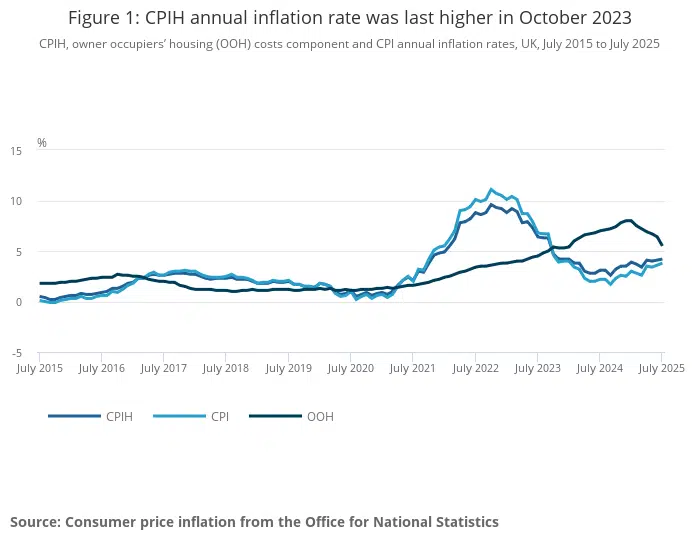
- The Consumer Prices Index including owner occupiers’ housing costs (CPIH) rose by 4.2% in the 12 months to July 2025, up from 4.1% in June.
- On a monthly basis, CPIH was flat, the same as July 2024.
- The Consumer Prices Index (CPI) rose by 3.8% in the 12 months to July 2025, up from 3.6% in June.
- Transport costs, particularly air fares, made the largest upward contribution, while housing and household services eased slightly.
- Core inflation, which strips out energy, food, alcohol and tobacco, remained stubborn, showing little movement.
What is driving inflation?
The small rise in inflation during July was largely driven by transport costs. Air fares jumped by more than 30% between June and July, with the school summer holidays likely playing a part in pushing up prices. Motor fuel costs also rose, with petrol and diesel both edging up after months of falling prices. Together, these factors made transport the biggest contributor to the inflation increase.
Restaurants and hotels also saw price rises, mainly from accommodation services such as overnight stays. Food and drink prices climbed for the fourth month in a row, with notable increases in items like beef, chocolate, coffee and fruit juices.
At the same time, housing and household services put downward pressure on inflation. Owner occupiers’ housing costs, which make up a significant part of the CPIH, rose more slowly than in June. This was the first time since 2010 that they actually fell slightly on a monthly basis. Rents also grew at their slowest pace since 2022, offering a small offset to rising costs elsewhere.
The wider picture
CPIH, which is the most comprehensive measure of inflation, reached 4.2% in July. This is the highest rate since late 2023. By comparison, CPI stood at 3.8%, showing how including housing costs makes a clear difference.
The split between goods and services also tells an important story. Goods inflation reached 2.7%, its highest since October 2023, with energy and fuel playing a big role. Services inflation held steady at 5.2%, but this still reflects strong price growth in areas such as hotels and flights, balanced out by weaker growth in housing costs and rents.
Core inflation remained little changed, with CPIH core at 4.2% and CPI core at 3.8%. This shows that underlying pressures, particularly from wages and demand in the services sector, remain present.
International comparisons
While inflation here has risen, other countries are seeing different trends. France reported a flash estimate of just 0.9% for July, while Germany stood at 1.8%. The gap highlights that domestic factors such as housing and transport costs are keeping inflation higher than in neighbouring economies.
Implications for interest rates
For you as a homeowner or potential buyer, the key question is what these figures mean for interest rates. At present, the Bank of England’s base rate is 4%. Higher inflation makes it less likely that rates will be cut in the near term, as policymakers will want to see stronger evidence that pressures are easing.
While the rise in transport costs may be partly seasonal, the ongoing stickiness of core inflation and wage growth suggests the Bank will continue to take a cautious stance. Rate cuts may still be on the horizon, but the timing looks less certain.
For anyone with a mortgage, this means that borrowing costs are likely to remain high for longer. If you’re on a fixed rate that’s due to end soon, it’s worth preparing now by reviewing your options.
How this affects you
Inflation may feel like just a number in the news, but it has a very real impact on day-to-day life. Rising food, travel and accommodation costs make everyday spending more expensive, while higher interest rates make mortgages and loans harder to manage. At the same time, slower growth in housing costs and rents could offer some relief, though the overall picture is still one of pressure on household budgets.
If you’re a homeowner, rising living costs can make it harder to balance your mortgage payments with other expenses. If you’re looking to buy, higher rates can affect how much you can borrow and what your monthly repayments look like.
This is where planning ahead makes a difference. Reviewing your mortgage early, understanding what options are available, and ensuring your protection policies are up to date can help you stay financially resilient even when the economic picture is uncertain.
Moving forward: how we can help
At Kerr & Watson, we keep a close eye on changes like this because we know how important they are to you. Whether inflation rises or falls, it influences the choices the Bank of England makes on interest rates, and in turn affects mortgages and borrowing.
If you’re due to remortgage soon, considering buying a new home, or simply want to review your protection cover, now is a good time to talk through your options. We can provide tailored advice that takes account of both your personal circumstances and the wider economic situation.
Conclusion
Inflation in July 2025 ticked up slightly to 4.2% on the CPIH measure, with transport costs leading the way. While housing and household services helped to offset some of the increase, core inflation and services prices remain sticky.
The Bank of England will see these figures as a reason to hold steady for now, keeping rates at their current level until more evidence of sustained falls emerges. For households, this means continued pressure from both living costs and borrowing costs.
By staying informed and reviewing your financial plans, you can put yourself in a stronger position. At Kerr & Watson, we’re here to guide you through these challenges with expert mortgage and protection advice.
Contact us today to discuss how the latest changes could affect your plans and how we can support you.
Data Source: Office for National Statistics (ONS)
Read more: Consumer price inflation, July 2025