
Bank of England Base Rate Update: August 2025
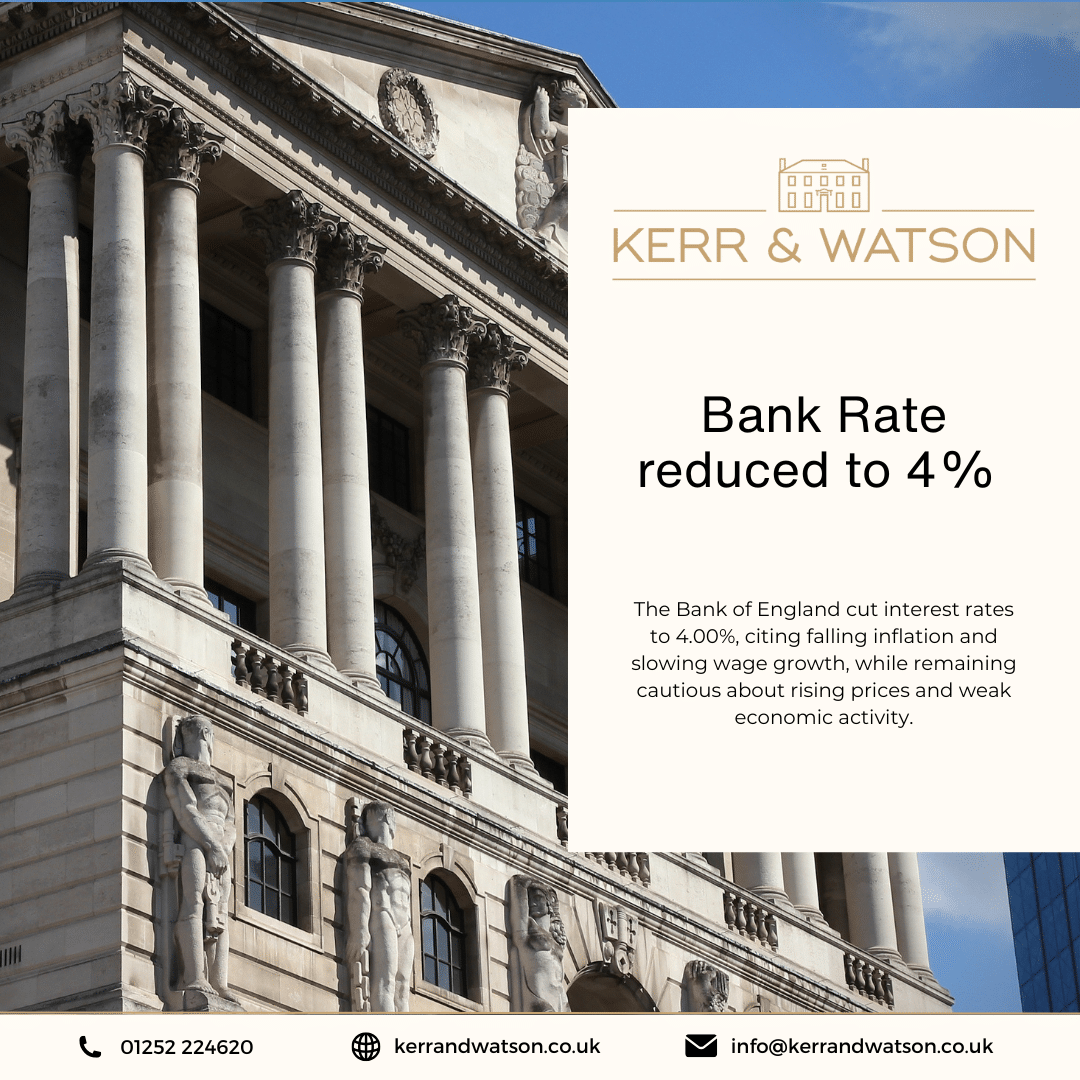
The Bank of England has made its latest decision on interest rates, and it could impact your mortgage, savings or overall finances. On 7 August 2025, the Bank of England’s Monetary Policy Committee (MPC) voted to reduce the base rate by 0.25%, bringing it down from 4.25% to 4%.
This change might not seem huge, but it can make a difference to your monthly payments or the interest you earn. Whether you’re a homeowner, a first-time buyer, or just trying to make sense of what’s going on, here’s what you need to know.
What is the base rate and why does it matter?
The base rate is the interest rate the Bank of England charges other banks and lenders when they borrow money. It has a knock-on effect on the rates banks and lenders offer to the public for mortgages, loans, and savings.
When the base rate goes up, borrowing usually becomes more expensive, but savers can earn more interest. When it comes down, borrowing tends to be cheaper, and savings rates may drop too.
Why was the base rate reduced in August 2025?
The Bank of England’s goal is to keep inflation (the rate at which prices rise) at around 2%. Over the last couple of years, inflation has been falling, helped by higher interest rates, which made borrowing more expensive and slowed down spending. Now that inflation is closer to the target, the Bank has started to lower interest rates to support economic growth.
Here’s what led to the decision:
- Inflation progress: After peaking in previous years, inflation has dropped significantly, showing the Bank’s earlier actions worked.
- Current inflation: CPI inflation rose to 3.5% in the second quarter of 2025, and it’s expected to peak at 4.0% in September before falling again.
- Wages and prices: Pay rises are still happening but have started to slow down, which could help reduce inflation in the long run.
- Economic activity: Growth has been fairly weak, and there are signs that businesses and households are spending more cautiously.
What was the result of the vote?
The decision to reduce the base rate was very close. Here’s how the MPC voted:
- 5 members voted to cut the base rate by 0.25% to 4%
- 4 members voted to keep it at 4.25%
- 1 of those 5 who voted for a cut actually preferred a bigger reduction (0.5%) but agreed to 0.25% to get the majority vote through
This tight vote shows that even within the Bank of England, there’s a careful balance between encouraging growth and keeping inflation under control.
What does this mean for mortgages?
If you have a mortgage or are thinking about getting one, this change could affect you in different ways:
If you’re on a variable or tracker mortgage:
- Your rate may go down, which could mean lower monthly payments.
- Some lenders may pass on the cut quickly, others may delay it.
If you’re on a fixed-rate mortgage:
- Your payments won’t change for now, but this news might help when it comes time to remortgage.
- Lenders may begin to lower fixed-rate deals, especially if they expect further base rate cuts in the future.
If you’re about to buy or remortgage:
- You could benefit from slightly better rates if lenders respond to the change.
- It’s still worth getting advice, as rates can vary and some deals may not change much at all.
What does this mean for savings?
Unfortunately, a lower base rate could mean lower returns for savers:
- Banks may cut the interest they offer on savings accounts.
- If you rely on savings interest for income, now might be a good time to review your options.
On the flip side, if you’re paying off debt or planning to borrow, lower rates could help you manage your repayments more easily. You can utilise our repayment calcultor to give you an idea on your repayments.
What are the wider economic signs?
While inflation has been falling, there are still a few things to keep an eye on:
- Services and energy prices are still high and could cause inflation to stay above target a little longer.
- The job market is showing signs of slowing down, with fewer vacancies and a slight rise in unemployment.
- Wages are growing more slowly, which could help reduce price rises in the months ahead.
- Growth is sluggish but steady, and trade concerns around tariffs have eased slightly.
The MPC is staying cautious. They’re not setting a fixed path for interest rates, they want to see more evidence of stable inflation before making more cuts.
What happens next?
The Bank of England has said future decisions will depend on how the economy develops. If inflation continues to fall and the job market remains stable, further cuts could happen gradually. But if inflation proves stubborn, they may pause or even reverse course.
They’ll be looking at how quickly prices and wages are slowing down, and whether people are spending or saving more.
Should you take action now?
Interest rate decisions affect everyone differently. If you’re not sure what to do next, it’s worth speaking to a qualified adviser who can look at your situation and help you make informed choices.
You might want to:
- Review your mortgage if you’re nearing the end of a fixed rate
- See if switching deals could save you money
- Reassess your savings strategy if returns are falling
- Plan ahead if you’re thinking of moving or buying your first home
Conclusion
The base rate has been cut to 4%, a sign that inflation is easing and the economy is slowly stabilising. It’s not a dramatic shift, but it does open up some opportunities, especially if you’re looking to borrow or remortgage.
That said, everyone’s circumstances are different. If you’re unsure how this change might affect you, we’re here to help. At Kerr & Watson, we offer clear, honest advice on mortgages and protection to help you feel confident in your next steps.
Get in touch with us today to see how the latest rate change could benefit you.
Read more: Bank Rate Reduced to 4% – August 2025