
Can You Get a Mortgage with Japanese Knotweed?
If you have found a home you love and the survey mentions Japanese knotweed, you might feel worry.
You may have heard stories about lenders refusing to lend or sales falling through at the last moment.
However, it can be possible to get a mortgage with Japanese knotweed present if the risk is understood and managed.
What Japanese knotweed is and why lenders care
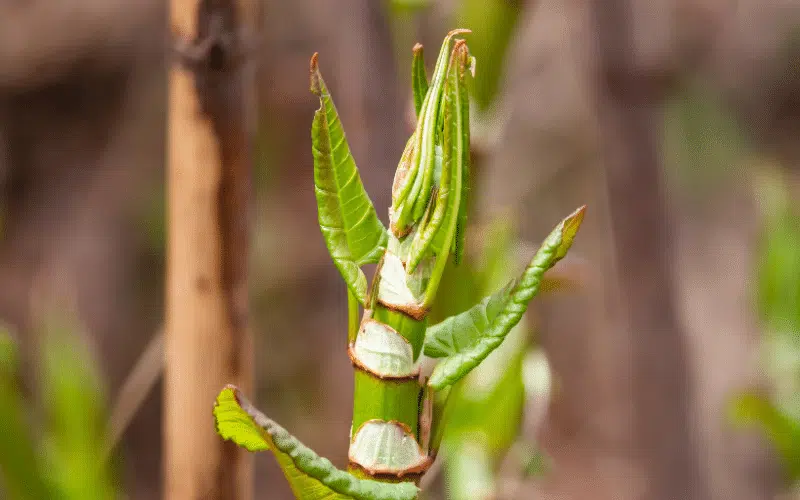
Japanese knotweed is an invasive plant with rapid growth and tough underground rhizomes. Left uncontrolled it can damage lightweight structures such as garden walls, paths, and patios, and it can affect the enjoyment of outdoor space.
For lenders, they need confidence that the plant will not threaten the value of their security. They also want to know that a buyer will not face ongoing liability with no plan in place.
Recent guidance from RICS shifted the focus away from old rules based purely on distance and toward a balanced assessment of real world impact and control.
Robust homes with substantial foundations are unlikely to suffer structural damage. In many cases lenders will proceed if there is a credible plan to control or remove the plant and a guarantee that the plan will be carried out properly.
Is It Possible to Get a Mortgage on a Property with Japanese Knotweed?
Many lenders will consider lending on a property with Japanese knotweed if the situation is properly assessed and managed.
For these lenders, decisions are made case by case and depend on where the plant is located, the extent of the growth, whether there is any damage, and what action has been taken or is planned. Lenders rely heavily on the valuer’s report and on evidence from a qualified specialist.
What lenders usually want to see
Every lender has its own policy but there are familiar themes. If you are aware of Japanese knotweed close by, expect to provide:
- A survey or specialist report that confirms the presence and extent of Japanese knotweed
- A management or treatment plan from a contractor who is a member of a recognised trade body such as the Property Care Association or the Invasive Non Native Specialists Association
- Evidence of an insurance backed guarantee that remains in force for several years and is assignable to future owners
- Confirmation of any visible damage and whether remedial works are needed
If the plant is on neighbouring land, surveyors will normally report it when it is within a few metres of the boundary or when the scale suggests a risk of encroachment.
That does not automatically stop lending. What matters is whether a realistic control plan exists and whether the risk to value and saleability is low.
How the updated approach helps you
The focus now is on control and amenity rather than blanket refusal based on distance alone. In many scenarios lenders will accept an ongoing herbicide plan with an insurance backed guarantee rather than demanding expensive excavation.
For some properties where knotweed is off site and under control, no works may be required.
Find out Your Options
Buying a home where knotweed is present
If you are purchasing, start by gathering the right documents early. Ask the seller for the management plan, the schedule of treatments already completed, and the insurance backed guarantee. Often the vendor commissions the plan and pays for the initial works, with the guarantee assigned to you on completion.
Tell your solicitor and your broker as soon as the plant is mentioned in a survey. The valuer will reference the situation in their report, and underwriters will want to see that the risk is controlled.
Remortgaging a property with knotweed
If you already own a home and knotweed is recorded on a valuation, a remortgage may still be achievable with the right evidence.
Lenders will ask whether the plant has been treated, whether treatment is ongoing, and whether the guarantee is still valid. We can help you renew a lapsed plan or move to a new contractor if needed.
If your current lender is cautious, we can look at alternatives who are comfortable with well managed cases so that you still have access to competitive pricing.
Letting a property where knotweed is present
Buy to let lenders want to protect value and rental marketability. Many will lend if there is a treatment plan and guarantee, and where the valuer confirms low impact on the property and its amenities.
Some will ask for a minimum term remaining on the guarantee.
What a good treatment plan looks like
Lenders are reassured by clarity and credibility. A strong plan usually includes:
- A survey by an accredited contractor with photos and a site map
- A description of the chosen method such as herbicide treatment or physical removal and the reasons why it suits the site
- A schedule of visits and monitoring for several seasons
- An insurance backed guarantee that transfers to future owners and remains valid if the contractor ceases trading
Common questions about mortgages and Japanese knotweed
Will rates be higher?
Not automatically. Pricing depends on the lender and the product. Some lenders may limit your product choice when a case is higher risk, but many offer standard rates when a strong plan and guarantee are in place.
Do you always need a specialist report?
Likely, yes if the plant is present or strongly suspected. Lenders and valuers rely on expert evidence rather than informal commentary. We arrange quotations quickly from accredited firms so you can keep momentum.
What if knotweed is on a neighbour’s land?
Surveyors will usually record it if it is close to the boundary or spreading toward the property. If a neighbour cooperates with a professional plan and monitoring, many lenders will still proceed. We can provide a template letter for the neighbour and support an amicable route that satisfies underwriting.
What about legal duties?
You do not have to remove Japanese knotweed by law, but you must not cause it to spread to another property and you should deal with controlled waste correctly. A professional contractor will handle disposal and paperwork, which also helps with mortgage acceptance.
Can you insure against future regrowth?
Yes. The guarantee attached to a proper treatment plan provides assurance that retreatment or further works will be covered if regrowth occurs during the guarantee period. Lenders like to see that protection in place.
Mistakes to avoid
Do not ignore early signs. A small patch is easier and cheaper to control than a widespread problem.
Do not use unaccredited contractors. Without recognised membership and a proper guarantee, many lenders will not accept the plan.
Do not delay sharing documents with your broker. Underwriters prefer to see a complete picture, which avoids last minute conditions.
Do not attempt ad hoc removal and then dispose of waste with garden rubbish. Disposal rules are strict, and mistakes can create legal and lender issues.
Conclusion
You can get a mortgage with Japanese knotweed depending on the lender and full circumstances.
Lenders want reassurance that the risk is understood, that a professional plan is in place, and that the guarantee will protect you and any future buyer.
With that evidence to hand, some applications can proceed on standard terms.
If you want bespoke mortgage advice, contact Kerr and Watson today.