
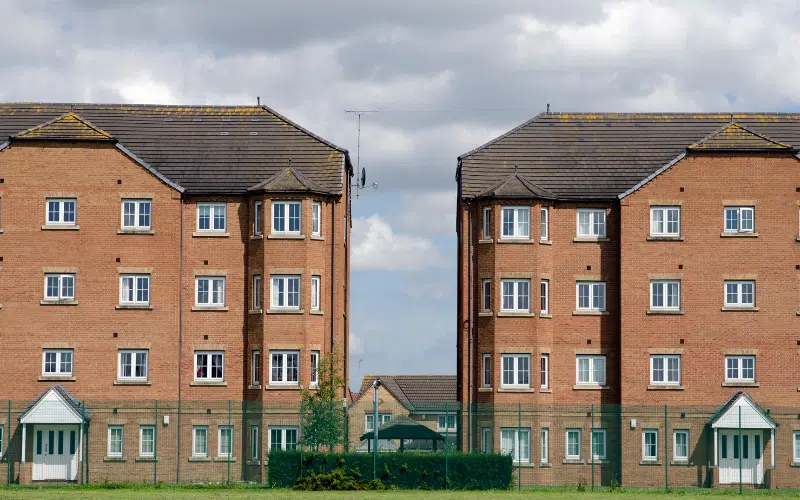
Large Commercial Mortgages for Apartment Blocks
When you are buying or refinancing an apartment building, the finance is key. Larger blocks bring bigger numbers and deeper due diligence.
You might be aiming for a £5 million multi unit block. You might be structuring a £25 million portfolio facility. You might even be exploring funding at £50 million plus for a major residential investment.
Large commercial mortgages for apartment buildings exist for these scenarios. They can help you purchase, refinance, raise capital, or grow a portfolio in a controlled way.
Not Sure How Much You Could Borrow For An Apartment Building?
Large commercial mortgages are assessed very differently from standard buy-to-let finance. Lenders will look closely at rental income, occupancy levels, property type, management experience and the overall strength of the investment.
At Kerr & Watson, we help investors secure finance for apartment buildings, multi-unit freehold blocks and larger residential investment properties.
What Is A Large Commercial Mortgage For An Apartment Building
A commercial mortgage is a loan secured against a property used for business or investment purposes.
When the security is an apartment building with multiple self contained units, lenders often treat it as a multi unit freehold block mortgage. Some lenders also refer to this as commercial buy to let, especially when it is purely residential but held as an investment.
The word large is not a formal category. In practice, it usually means a higher value asset and a larger loan size, often from £1 million upwards.
Many lenders work well beyond that level, with some capable of supporting facilities up to £50 million and higher for the right case.
You can use large commercial mortgages for:
- Purchasing an apartment building
- Refinancing an existing facility
- Releasing capital to reinvest
- Funding refurbishments or improvements
- Consolidating borrowing across multiple assets
- Supporting portfolio expansion
Can You Get A Mortgage For An Entire Apartment Building?
Yes. Many lenders provide commercial mortgages for apartment buildings, blocks of flats and multi-unit freehold blocks.
The exact lending options available will depend on:
- Number of units
- Property value
- Rental income
- Occupancy levels
- Property condition
- Borrower experience
Larger apartment buildings often require specialist commercial lenders, challenger banks or private banks rather than standard buy-to-let lenders.
Why These Mortgages Differ From Standard Buy To Let
Standard buy to let tends to focus on one property and one tenancy. Large apartment buildings operate at a different scale. Lenders focus less on your personal income and more on the building as an income producing asset.
With larger blocks, underwriting centres on:
- Rental income strength
- Debt service coverage ratio, often called DSCR
- Valuation and the quality of the building
- Tenancy profile and tenancy terms
- Your experience and operational capability
- Your wider balance sheet and liquidity
This is why an investment focused approach matters. You are not only borrowing against bricks and mortar. You are borrowing against the reliability of income.
Typical Loan Sizes And What Lenders Consider Large
Large commercial mortgages often begin at around £1 million, but this varies by lender. Many lenders quote minimums such as £150,000 or £500,000, then scale up to £35 million or £50 million depending on their criteria and the asset type.
For you, large tends to mean the case requires:
- More specialist underwriting
- More detailed paperwork
- A more involved valuation process
- More lender focus on structure and risk
That does not mean it has to be difficult. It means the preparation has to be sharper.
How Much Deposit Do You Need For An Apartment Building Mortgage?
Deposit requirements vary depending on the property and lender.
Typically:
- 25% deposit may be possible for stronger cases
- 30%–35% is common for many apartment buildings
- 40% or more may be required for complex properties or inexperienced investors
Factors influencing deposit requirements include:
- Number of units
- Building condition
- Occupancy levels
- Investor experience
- Loan size
A larger deposit can often improve lender choice and access to better rates.
Loan To Value And How You Can Push Leverage
Loan to value is the percentage of the property value the lender will fund. For apartment buildings, you will often see up to 70 to 75 percent loan to value, depending on the building, the income, and your profile.
In certain scenarios, leverage can increase if you provide additional security. This is often called cross collateralisation. You might offer another property, or a wider portfolio, to reduce lender risk. This can sometimes allow you to reduce the cash deposit required, though it increases the overall security pledged.
The right leverage is not always the highest leverage. It is the leverage that leaves you comfortable under stress testing, voids, and unexpected costs.
Terms, Repayment Options, And Flexibility
Large commercial mortgages can be structured in different ways depending on your strategy.
Loan terms
You may see terms from one year to thirty years. Some lenders offer longer terms in niche scenarios, but most long term investment borrowing sits within five to thirty years.
Shorter terms can suit:
Assets needing refurbishment
Transitional tenancy situations
Bridge to stabilisation, then refinance
Longer terms can suit:
Stable rent rolls
Long term hold strategies
Lower monthly payment goals
Repayment types
You can often choose between:
- Interest only
- Capital repayment
- Part interest and part capital
- Balloon repayment where you repay a lump sum at the end
Interest only is common for large investment blocks. It can support cash flow and allows you to deploy capital elsewhere. You still need a credible exit plan, even if your plan is simply to refinance.
Interest Rates And Fees You Should Expect
Rates for large commercial mortgages vary widely. They depend on:
- Loan size and loan to value
- Strength of rental income
- Property location and condition
- Tenancy profile and void risk
- Your experience and track record
- Whether the building is purely residential or mixed use
Rates are often higher than residential mortgages. Lenders also charge fees, usually including an arrangement fee and valuation fee. Some lenders offer incentives for energy efficient property, such as green cashback for stronger EPC ratings.
The real comparison is not only the headline rate. You should consider total cost of borrowing, term flexibility, and exit fees.
What Lenders Look For When Underwriting
Rental income and DSCR (Debt Service Coverage Ratio)
DSCR measures how comfortably rental income covers debt payments. Each lender sets its own DSCR requirement. Many want a solid buffer to allow for voids and costs.
To strengthen this area, you can provide:
- A clean rent roll
- Proof of rents received
- Tenancy agreements
- Evidence of local market rents
- A void and arrears history, if available
If you are buying a building with upside, be careful. Lenders may not give full credit to projected rent increases until they are proven.
Property valuation and condition
Valuation is not only about the number. It is also about risk to the lender.
Valuers look at:
- Construction type and condition
- Fire safety position and compliance documentation
- Unit mix and unit sizes
- Demand in the local area
- Quality of communal areas
- Maintenance requirements
If works are needed, show costs and timelines clearly. Lenders can still lend, but they need confidence you will deliver.
Find out Your Options
Your experience and management plan
For larger blocks, lenders like to see:
- Relevant track record
- A clear management setup
- Professional letting and maintenance systems
- A plan for tenant communication and retention
If you are newer to apartment buildings, you can still proceed. You may need a stronger deposit, conservative assumptions, and a credible managing agent.
Can First-Time Investors Get A Mortgage For An Apartment Building?
Potentially. Many lenders prefer experienced landlords when financing larger apartment buildings, but some will consider first-time investors.
To strengthen an application, lenders may look for:
- A strong deposit
- Professional property management
- A detailed business plan
- Previous property ownership experience
- Strong personal finances
The larger and more complex the building, the more experience lenders usually prefer to see.
Borrower strength and structure
Many large cases sit within limited companies, partnerships, or special purpose vehicles. Lenders want clean ownership, clear financials, and an understanding of who is responsible for the loan.
They also look at personal and business credit history. Minor issues can be workable. Unexplained problems can be costly.
What Is A Multi Unit Freehold Block (MUFB)?
A Multi Unit Freehold Block (MUFB) is one of the most common structures used when purchasing an apartment building.
A MUFB consists of multiple self-contained flats held under a single freehold title.
Many lenders prefer MUFBs because:
- Ownership is straightforward
- Rental income is diversified across multiple tenants
- Management can be more efficient
MUFB lending criteria often differ from standard buy-to-let mortgages, particularly when there are six or more units.
Mortgage Types That Often Fit Apartment Building Deals
Multi unit freehold block mortgages
This is common where you hold multiple flats under one freehold title. Underwriting focuses on rental income and asset strength.
Semi commercial mortgages
If the building includes commercial space, you may need semi commercial funding. Lenders assess both income streams and the effect on valuation.
Portfolio and umbrella facilities
If you own multiple buildings, a portfolio facility can simplify finance. Some lenders offer umbrella style limits, which can support repeat acquisitions with less friction once the relationship is established.
Remortgaging An Apartment Building
Commercial mortgages are not only used for purchases.
Many investors refinance apartment buildings to:
- Release equity
- Improve cash flow
- Secure better rates
- Fund refurbishment projects
- Purchase additional investment properties
Where property values and rental income have increased, refinancing may provide access to additional capital for growth.
Green commercial mortgages
If you are investing in energy efficiency, green lending can improve your overall deal. Better EPCs can help with tenant appeal too.
Can You Get A Commercial Mortgage With Bad Credit?
Potentially.Some specialist lenders are willing to consider applicants with historic credit issues.
Factors they assess typically include:
- The type of adverse credit
- How recently it occurred
- Whether it has been satisfied
- Deposit size
- Rental performance
- Overall strength of the investment
A profitable apartment building with strong occupancy levels can often improve lender appetite.
Regulation And The Forty Percent Point
Large commercial mortgages for apartment buildings are often unregulated, particularly when they are for investment. Regulation can change if a significant portion is intended for your own residential use.
A common guide is the forty percent threshold. If more than forty percent is intended to be occupied by you or a related person as a dwelling, it can change the regulatory position.
You should get advice early if any part of the building is intended for your own use. It can affect lender choice and documentation.
Common Challenges When Financing Apartment Buildings
Apartment buildings often present additional considerations compared to single buy-to-let properties.
Common issues include:
- Void periods across multiple units
- Fire safety requirements
- Service charge arrangements
- Building maintenance costs
- Tenant concentration risk
- Energy efficiency requirements
Understanding these challenges early can help avoid delays during the mortgage process.
Frequently Asked Questions About Apartment Building Mortgages
Can I get a mortgage for an entire apartment block?
Yes. Many commercial lenders provide mortgages for apartment buildings and blocks of flats.
What is a MUFB mortgage?
A MUFB mortgage is finance secured against a multi-unit freehold block containing multiple self-contained flats.
How much deposit do I need?
Most lenders require between 25% and 40%, depending on the property and borrower profile.
Can I refinance an apartment building?
Yes. Commercial remortgages are commonly used to release equity or secure improved terms.
Do lenders use rental income to assess affordability?
Yes. Rental income and DSCR are usually among the most important underwriting factors.
Can first-time investors buy apartment buildings?
Potentially, although lender choice is often more limited.
Conclusion
Large commercial mortgages can provide the funding needed to purchase, refinance or expand apartment building investments.
Because lenders assess apartment buildings differently from standard buy-to-let properties, choosing the right lender and presenting a well-structured application is essential.
Whether you are purchasing your first multi-unit block or expanding an established portfolio, specialist advice can help you secure the most suitable finance solution.
Need Help Financing An Apartment Building?
At Kerr & Watson, we help investors secure commercial mortgages for apartment buildings, multi-unit freehold blocks and larger residential investment properties.
We can assess your plans, identify suitable lenders and help structure the application to maximise your chances of approval.
Contact Kerr & Watson today to discuss your options.