Inflation – October 2025 At a glance
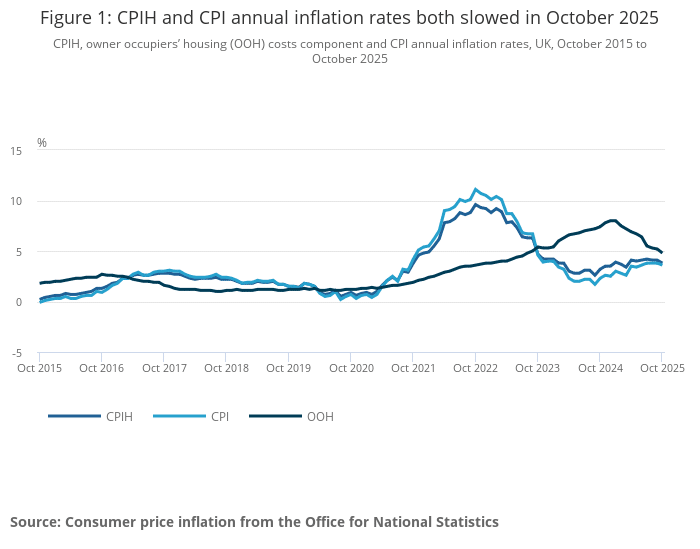
Inflation continued to edge down in October, offering a small sign of progress while still keeping household budgets under pressure. The Consumer Prices Index (CPI) fell to 3.6% in the year to October, down from 3.8% in September. Although this is a step in the right direction, CPI remains well above the Bank of England’s 2% target.
On a monthly basis, prices rose by 0.4% in October, slower than the 0.6% rise seen this time last year. While some sectors saw easing costs, others continued to move in the opposite direction, leaving the overall picture mixed.
Key points at a glance
- CPI fell to 3.6% in the 12 months to October, down from 3.8% in September.
- Monthly CPI rose by 0.4%, compared with 0.6% in October last year.
- Housing and household services made the largest downward contribution.
- Food and non-alcoholic drinks made the largest upward contribution.
- Core CPI fell slightly to 3.4%, down from 3.5% in September.
What’s driving the numbers
The small drop in CPI was mainly due to easing energy-related costs, while higher food prices provided the main upward pressure.
Housing and household services
This sector had the biggest downward impact on inflation in October.
Annual inflation here fell from 7.3% in September to 5.2% in October.
The main reason was a slowdown in gas and electricity price rises. Both saw smaller monthly increases than last year, following changes to the energy price cap.
Gas prices rose by 2.1% over the year to October, compared with 13.0% in September.
Electricity prices rose by 2.7%, compared with 8.0% the previous month.
These slower rises helped pull the overall inflation figure down. While energy bills did increase slightly month-on-month, the rises were far more modest than those seen in October 2024.
Food and non-alcoholic beverages
Food prices continued to push inflation higher.
Annual food inflation rose to 4.9% in October, up from 4.5% in September.
Food prices increased by 0.5% on the month, compared with just 0.1% this time last year.
Several categories saw noticeable increases, including bread and cereals, meat, fish, vegetables, and confectionery.
Fruit was the only category to provide a small downward effect.
This mix kept overall inflation from falling further. For many households, the rise in day-to-day grocery costs will feel more immediate than the easing of energy bills.
Restaurants and hotels
This sector helped bring inflation down slightly.
Annual inflation fell from 3.9% in September to 3.8% in October.
Accommodation prices dropped by 2.2% between September and October, compared with a much smaller fall of 0.2% last year.
Although small, this contributed to easing overall price growth in services.
Transport
Transport costs were broadly unchanged, continuing to rise by 3.8% in the year to October.
The picture here was mixed:
Air fares rose by 1.7% between September and October, but this was far smaller than the 6.3% increase seen last year, creating a downward influence.
Motor fuel prices increased month-on-month, adding upward pressure.
Petrol rose by 0.7 pence per litre in October, compared with a fall this time last year.
Diesel rose by 1.2 pence per litre, reversing last year’s decrease.
Overall, motor fuel prices were 1.4% higher than a year ago.
Core inflation
Core CPI, which removes more volatile categories such as food, energy, alcohol and tobacco, fell to 3.4% in October. This compares with 3.5% in September.
This small drop suggests some underlying price pressures are easing, but the pace remains slow.
How CPI compares internationally
CPI here remains higher than in several other major economies.
Germany saw inflation at 2.3% and France at 0.9% in October.
The difference highlights the challenge of bringing inflation down consistently.
What this means for interest rates
With CPI still sitting comfortably above the 2% target, the Bank of England is unlikely to rush into cutting interest rates. Policymakers will want to see several months of steady progress before considering any changes.
The latest figures show movement in the right direction but not enough to shift expectations significantly. A gradual approach remains the most likely outcome.
What this means for you
Even though inflation has eased slightly, many households are still experiencing higher prices across key areas such as food and essential services. Slower rises in energy costs offer some relief, but everyday expenses remain elevated.
If you’re a homeowner or planning to buy, the interest rate outlook remains important. A stable or higher base rate helps control inflation but also keeps mortgage rates firmer than many would like.
Fixed-rate mortgages may continue to appeal if you want predictable monthly payments. If you’re coming to the end of your current deal, you might find that rates have shifted since you last reviewed your options.
At Kerr & Watson, we can help you understand how these inflation trends and interest rate expectations affect your mortgage choices. Whether you’re remortgaging, purchasing your first home, or moving, we offer clear and tailored guidance to help you plan ahead with confidence.
Looking ahead
A few areas will be important to watch over the next few months:
- Food inflation, which continues to rise.
- Energy price movements following changes to the price cap.
- Core inflation, which shows underlying trends.
- Any signs of changing tone from the Bank of England regarding future rate cuts.
Conclusion
Inflation eased to 3.6% in October, thanks mainly to slower rises in energy-related costs. However, food prices and some service sectors kept overall inflation higher than the Bank of England would like. While this month’s figures are encouraging, progress remains gradual, and households are still feeling the effects of elevated prices.
By understanding how inflation and interest rates interact, you can take steps to protect your finances and plan ahead. If you’d like to talk through what this means for your mortgage or protection needs, the team at Kerr & Watson is here to help you make clear, informed decisions.
Read more: Consumer price inflation, October 2025